In My Fifties Era Svg: A Designer's Review
As a professional who has spent years navigating the intersection of digital graphics and physical thread, I approach every new In My Fifties Era Svg with a critical eye. The market is flooded with generic birthday designs, but finding a piece that balances humor with structural integrity for embroidery is rare. When I first loaded the In My Fifties Era file into my design software, I wasn't just looking at a cute phrase; I was evaluating its potential as a commercial asset for my small shop. This specific design falls squarely into the Crafts category, yet its execution determines whether it becomes a bestseller or a wasted spool of thread.
First Impressions: Visual Weight and Mood
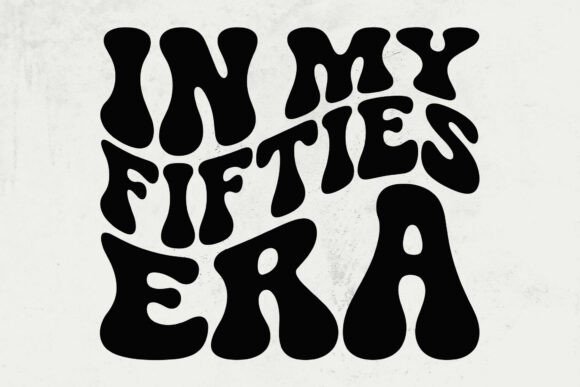
The initial visual impact of the In My Fifties Era Svg is immediate. It carries a retro-modern vibe that resonates well with current trends in personalized gifts. The typography is bold, which is excellent for embroidery because thin lines often get lost when converted from vector to stitch. However, the real test lies in how this Graphics file translates to fabric. The layout feels balanced, avoiding the common pitfall of overcrowding the center while leaving too much empty space on the edges. For an Etsy seller or boutique owner, this balance suggests a design that will look professional on a finished product without requiring excessive editing.
The mood is celebratory yet grounded. It doesn't scream "party" in a chaotic way; instead, it offers a witty nod to aging that appeals to the target demographic. When considering machine embroidery design principles, the curves in the lettering are smooth enough to handle satin stitching without jagged edges, provided the stitch density is managed correctly.
A Real-World Scenario: The Custom Sweatshirt Project
To truly understand the utility of this file, imagine preparing a custom order for a client turning fifty. The request is simple: a high-quality sweatshirt that looks handmade and premium. I decide to use the In My Fifties Era Svg for the chest area of a heather grey fleece. Here is where the practical evaluation begins. Unlike a t-shirt, a sweatshirt has a textured surface that can interfere with stitch density. If the design relies too heavily on tight fill stitches, the fabric might pucker, ruining the drape of the garment.
Upon reviewing the file, I notice the letterforms have enough internal space to allow for a mix of satin stitch outlines and lighter fill stitch interiors. This combination is crucial for maintaining flexibility in the fabric. If I were to place this on a dark-colored hoodie, I would need to ensure the backing stabilizer is robust enough to prevent show-through. The In My Fifties Era design holds up well in these mental mockups, suggesting it is versatile enough for both light and dark fabrics, though the thread colors must be chosen carefully to maintain contrast.
Performance on Textured and Stretchy Fabrics
One of the biggest challenges in custom apparel is working with stretchy materials like jersey knit or fleece. The In My Fifties Era Svg features distinct shapes that could distort if the hoop tension is not perfect. In a real project, I would advise using a cutaway stabilizer rather than a tear-away one. This ensures that the embroidery remains stable after multiple washes. The design's structure supports this approach, as the letters are substantial enough to anchor themselves against the pull of the fabric.
However, caution is required if you attempt to use this design on very thin fabrics or items with complex curves, such as caps. While the text is readable, the smaller details within the "Era" portion of the phrase might become indistinct on a curved brim. For a cap project, I would recommend scaling the design slightly larger to compensate for the distortion caused by the curvature. Always remember that what looks crisp on a screen may behave differently on a three-dimensional object.
Strategic Use for Small Business Owners
For those running a craft business, the value of a design like In My Fifties Era Svg extends beyond a single gift. It serves as a reliable asset for creating cohesive collections. Imagine a holiday collection featuring various age milestones; this design fits perfectly alongside other seasonal items. Its clean lines make it suitable for embroidered patches as well. Creating a patch version allows for inventory management—you can stockpile the patches and apply them to tote bags, denim jackets, or aprons on demand.
When selling these as handmade products, the perception of quality is paramount. Customers trust brands that deliver consistent results. If the In My Fifties Era design is stitched with precision, using high-quality thread colors that pop against the background, it elevates the perceived value of the item. Conversely, poor execution can damage your reputation. Therefore, testing the design on scrap fabric before committing to a customer order is non-negotiable. Check for any loose threads, skipped stitches, or areas where the running stitch might be too sparse.
Navigating Licensing and Commercial Use
A critical aspect of using digital files like the In My Fifties Era Png or SVG is understanding the licensing terms. Since this is an INSTANT DOWNLOAD digital product, the creator likely specifies whether you can sell the finished goods. As a reviewer, I always remind my readers to verify if the license permits commercial embroidery projects. Some licenses restrict the number of items you can sell or require attribution. Ensuring compliance protects your business from legal issues and respects the original designer's work.
If you plan to create printable mockups for your online store, ensure the resolution of the digital embroidery file preview is sufficient. High-resolution images help buyers visualize the final result, increasing engagement and sales. The clarity of the In My Fifties Era graphic makes it an excellent candidate for marketing materials, provided you have the rights to do so.
Technical Considerations for Embroidery Designers
From a technical standpoint, the In My Fifties Era Svg requires attention to detail regarding hoop size. While the design appears compact, the actual dimensions once digitized might exceed standard 4x4 hoops depending on the font weight. Always measure the bounding box in your software before hooping. If the design is too large for your machine, you may need to split it into sections, which can affect the seamless look of the final piece.
Another factor is the interaction between the design and the fabric texture. On a heavy canvas tote bag, the design will sit flat and proud. On a delicate baby blanket, however, the same design might feel too heavy. Adjusting the stitch density and reducing the underlay can mitigate this issue. For baby embroidery projects, consider softening the edges of the letters to prevent irritation against sensitive skin.
Final Verdict on Practical Application
Ultimately, the In My Fifties Era Svg is a strong contender for anyone looking to expand their portfolio of birthday-themed design assets. It offers a blend of humor and style that appeals to a wide audience. Whether you are creating a personalized gift for a friend or stocking your shop with small shop product variations, this design provides a solid foundation. However, success depends on your ability to adapt it to different materials and conditions.
Remember to always test on scrap fabric, check your stabilizer choices, and respect the licensing agreements. By treating the In My Fifties Era design with the care it deserves, you can produce high-quality finished products that stand out in a crowded market. For the serious crafter or entrepreneur, this is more than just a funny slogan; it is a tool for building a brand that values quality and creativity.